Description
ABOUT THE PRODUCER:
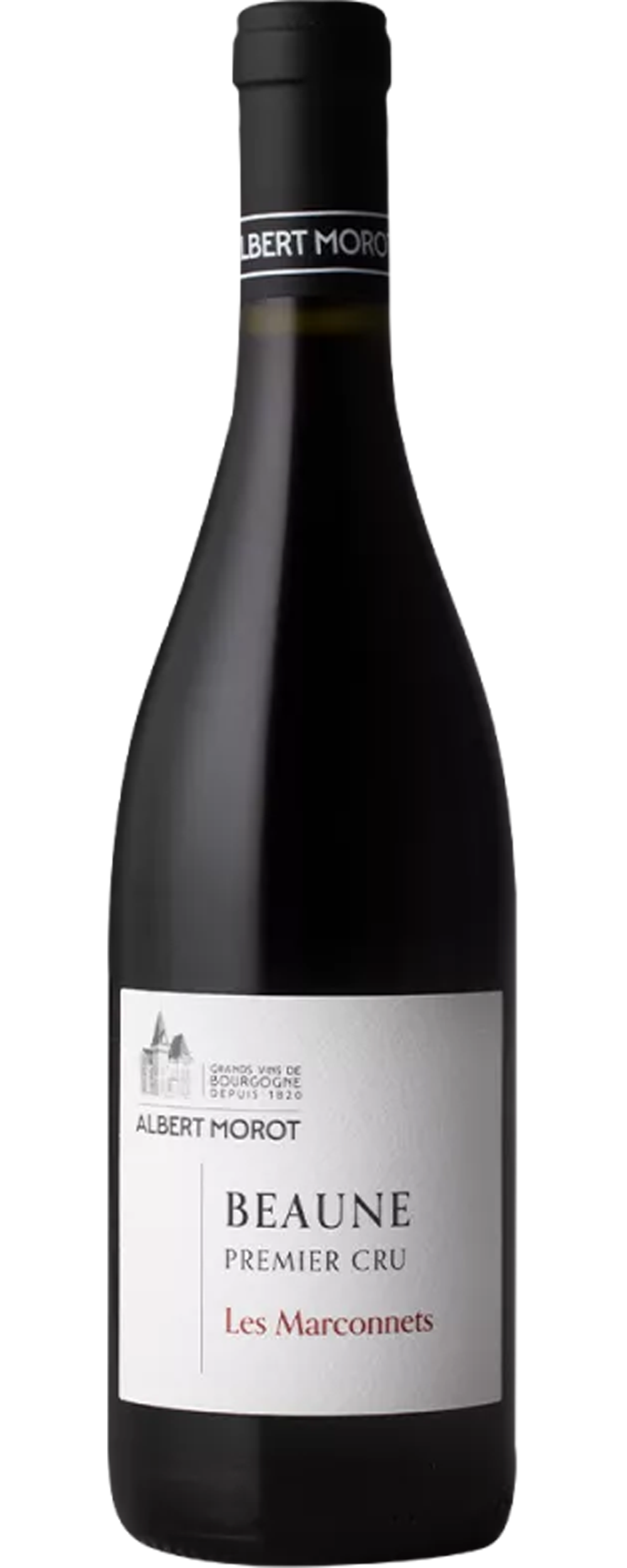
Founded in 1820, Albert Morot was originally one of the largest négociant houses in Burgundy. In 1880, Berthe Morot built the castle in Creusotte Park, where the estate is still located today. Subsequent generations ceased négociant activities and focused on the estate vineyards. In 2000, Albert Morot’s great-great-nephew, Geoffroy Choppin de Janvry took over. He committed to sustainable farming and the estate has been certified organic since 2015. The estate covers eight hectares, distinguished by 10 appellations in the most famous Premiers Crus of the Beaune appellation. Adopting a minimal intervention approach, Geoffroy crafted wines of ultimate purity. In 2023, the Guillaume and Sophie Poitrinal family group acquired the historic estate. Winemaker Pierre-Jean Villa manages the estate, providing new impetus while continuing the work carried out over several generations. Pierre-Jean aims to produce vibrant, elegant wines from this mosaic of parcels.
ABOUT THE VINEYARD:
Les Marconnets is a 1er Cru climat of the Beaune appellation, which extends over the two communes of Beaune and Savigny. Domaine Albert Morot’s tiny plot of 0.67 hectares sits at the top of the slope, facing south-east. It benefits from a complex limestone soil, which is combined with loam, sand and clay elements and produces wines of power and aromatic complexity. The Guyot pruned vines have an average age of 50 years and are planted at a density of 10,000 vines per hectare. A green harvest takes place in July and meticulous sorting at harvest ensures the yields are kept low at 25 to 35 hectolitres per hectare. The vineyard is certified organic; the soil is carefully ploughed and the biodiversity of the vineyard is respected.
THE WINEMAKING PROCESS:
The grapes were hand-picked and carefully sorted in the vineyard into small crates to avoid crushing, followed by a second meticulous selection on the sorting table. The grapes were destemmed and were gravity fed into traditional open vats. Fermentation took place with indigenous yeasts, followed by maceration which lasted for three weeks under temperature controlled conditions. One or two ‘pigeages’ or cap submersions took place each day, gently extracting colour, flavour and tannins. Slow malolactic conversion took place. The wine was aged in French oak barrels, of which 30% were new, for 14 months. The wine was bottled without fining and generally without filtration. The wine was vinified as gently as possible in a gravity fed winery which facilitated minimal pumping.
OUR TASTING NOTES:
A wine of distinction and aromatic complexity, this 1er Cru delivers notes of ripe, red fruits enveloped in delicate spicy nuances through to a palate of finely structured tannins. Smooth and silky, with a long, elegant finish.
GRAPE VARIETY:
Pinot Noir 100%.
Only logged in customers who have purchased this product may leave a review.


Reviews
There are no reviews yet.